
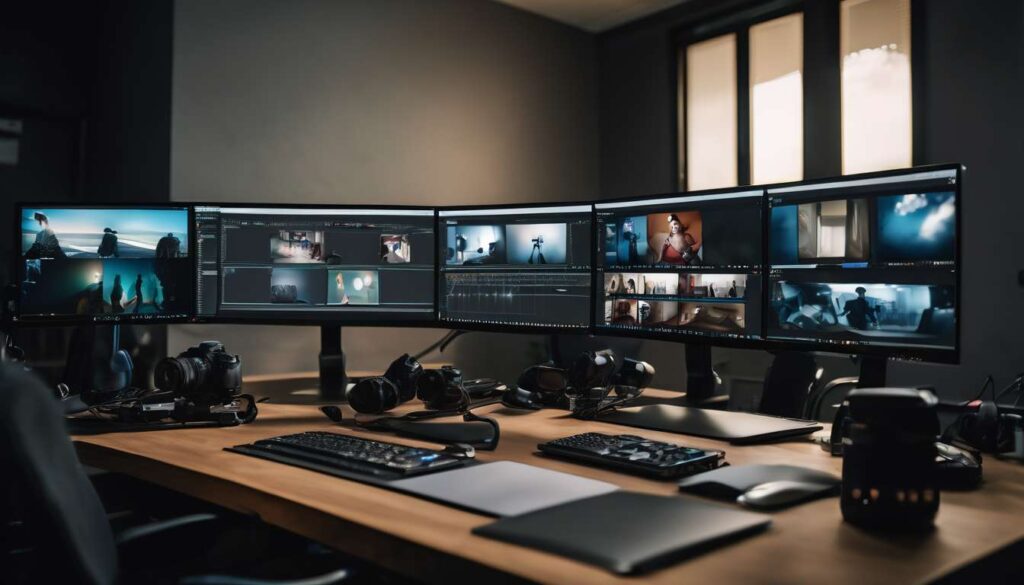
Under dim studio lights, we watched the footage arrive across continents as if someone had passed us a reel through the air.
We had been juggling hard drives and last-minute flights for years, believing proximity was the only path to polished adult content — until a late-night shoot in Berlin proved otherwise.
A remote editor in Tokyo assembled scenes while a colorist in São Paulo matched skin tones, and our producer in Los Angeles coordinated the rhythm from a laptop.
The result felt less like a compromise and more like an evolution: tighter turnaround, greater specialization, and unexpected creative input from collaborators who never met in person.
That night changed how we budgeted, scheduled, and imagined scale.
As we adapted tools and workflows, production capacity expanded beyond physical sets, allowing us to take on more projects without sacrificing quality.
This shift challenged old assumptions and opened new possibilities for sustainable, distributed adult video production.
- Improved turnaround times and efficiency
- Access to specialized talent anywhere in the world
- Reduced travel and logistical costs
- Greater creative diversity from remote collaboration
Remote Editing Benefits
We outsource postproduction to skilled remote editors to cut costs and speed delivery.
Benefits:
- Remote editing lets our crew stay focused on creative shoots.
- Trusted partners handle edits, color, and sound.
We standardize secure file transfer protocols and permissions.
Purpose:
- Protect privacy.
- Keep assets moving without bottlenecks.
We rely on clear briefs, version control, and checkpoints.
Outcome:
- Collaborators feel included and accountable across time zones.
Distributed production workflows let us parallelize tasks.
Typical flow:
- Footage arrives.
- Editors polish.
- QA reviews.
- Final masters export.
Result:
- Shorter turnaround.
- Greater consistency.
We build routines that welcome contributors.
Practices:
- Shared guidelines.
- Respectful feedback loops.
- Predictable schedules.
Impact:
- Fosters belonging and professional growth.
We reinvest budget savings into better gear and performer safety.
Principle:
- Scalability should improve both speed and care.
We monitor metrics and iterate on tools and handoffs.
Key metrics:
- Edit-to-release time.
- Error rates.
Goal:
- Keep the system efficient, secure, and supportive for everyone involved.
Building a Global Team
Team recruitment and coordination
We’ll recruit and coordinate skilled editors, colorists, sound engineers, and producers across time zones to build a reliable global team. We’ll seek people who share our standards, value respectful collaboration, and want to belong to a dependable crew.
With remote video editing central to our model, we’ll define clear roles, overlapping schedules, and shared style guides so handoffs feel seamless.
Onboarding, trust-building, and documentation
We’ll create onboarding rituals, regular check-ins, and peer review sessions that reinforce trust and collective ownership.
We’ll document workflows, naming conventions, and delivery expectations so every member knows how their work fits the whole.
Security and access
To protect contributors and content integrity, we’ll insist on vetted secure file transfer tools and access controls — non-negotiable even while optimizing for speed and convenience.
Distributed production and process resilience
We’ll design distributed production workflows that reduce bottlenecks by:
- Parallelizing tasks.
- Using versioning.
- Assigning backups for critical steps.
By investing in communication norms, mutual respect, and predictable processes, we’ll build a global team that’s skilled, connected, and proud to produce consistent, high-quality work together.
Secure File Transfer
We enforce encrypted, authenticated file transfers and strict access controls so sensitive footage and contributor data stay protected without slowing delivery.
Adopted transport and encryption standards
- End-to-end encryption for files.
- SFTP or HTTPS with strong ciphers.
- Per-project keys so access is scoped and revocable.
Practical impact for remote video editing
- Editors, producers, and contributors can share large files confidently.
- Permissions are explicit and revocable.
We standardize hashing and logging for integrity and observability
- File hashing for tamper detection.
- Centralized logging and automated alerts so anomalies are visible immediately.
Policies that balance security and speed
- Resumable transfers to avoid re-sending large files.
- Segmented uploads to parallelize and accelerate transfers.
- Regional caching where allowed to reduce latency.
Operational practices for distributed production workflows
- Clear onboarding and role-based access.
- Shared responsibility for secrets and credentials.
- Concise, communal documentation and periodic access reviews.
Security is a trust practiceWe treat secure file transfer not just as technology, but as a way to keep our creative community working together efficiently and respectfully.
Optimized Workflows
We streamline toolchains, handoffs, and review cycles so teams can iterate faster without sacrificing quality or compliance.
We standardize templates, naming conventions, and metadata so every contributor — no matter where they sit — feels part of the same process.
With remote video editing as a core practice, we define clear checkpoints and shared timelines that respect creators’ boundaries and collective standards.
We pair collaborative platforms with secure file transfer protocols to protect content while keeping feedback loops tight.
- This combination lets editors, colorists, and producers work concurrently without stepping on each other’s toes.
- It reduces rework and speeds up turnaround while maintaining asset security.
We document responsibilities and version control rules so handoffs are predictable.
- Clear ownership for each task and a single source of truth for files prevents duplication.
- Lightweight dashboards surface blocked tasks and outstanding approvals to keep momentum visible.
We design distributed production workflows that treat each role as essential, cultivating trust through transparency and predictable rhythms.
- Align tools, expectations, and communication channels.
- Establish recurring checkpoints and clear escalation paths.
- Provide orientation artifacts so new teammates can plug in quickly.
The result: contributors can onboard faster, contribute confidently, and rely on a professional workflow that balances speed, quality, and compliance.
Cost and Time Savings
We cut travel, studio, and turnaround costs by letting teams edit concurrently from anywhere, so projects finish faster without inflating budgets.
By embracing remote video editing, we reduce repeated bookings and idle studio hours, freeing funds for better equipment and fair pay.
Shared responsibilities across trusted team members mean fewer bottlenecks and predictable delivery windows.
We rely on secure file transfer to move high-resolution footage quickly and safely, protecting performers and staff while keeping schedules tight.
That security reduces the risk of costly leaks or rework, so we don’t need to over-allocate contingency budgets.
Our distributed production workflows let editors, colorists, and sound techs work in parallel rather than sequentially, which compresses timelines and spreads labor in a way that respects individual rhythms and expertise.
Together, we save on overhead while building a more resilient pipeline that includes everyone.
The result: faster releases, steadier income, and a cooperative environment where every contributor knows their role and value.
Creative Collaboration Tools
We use collaborative platforms and real-time tools so editors, directors, and performers can review, annotate, and iterate on cuts together without waiting for handoffs.
This creates shared spaces where everyone’s input matters.
- Feedback is visible, timestamped, and actionable.
- Live remote video editing keeps creative momentum by showing changes in real time and enabling discussion via integrated chat or video calls.
We rely on secure file transfer to protect contributors’ privacy and to move large assets quickly between team members.
- Security fosters trust, and trust builds belonging — people feel safe to suggest bold ideas.
- Our systems support versioning so teams can experiment without losing prior work.
Distributed production workflows let us align schedules and roles across locations while maintaining a unified creative vision.
- Set clear responsibilities.
- Use concise annotation standards.
- Run short review cycles.
By combining reliable technology and inclusive practices, we turn remote collaboration into a creative advantage that welcomes every collaborator’s voice.
Quality Control Practices
We establish standardized QC checklists and automated tests so we can catch technical issues, consistency errors, and compliance problems before a cut goes live.
We keep those checklists shared across teams engaged in remote video editing to ensure everyone follows the same standards, and we update them as formats, platforms, and regulations change.
We integrate automated waveform, color-level, and codec validation into our pipelines so human reviewers can focus on context, pacing, and consent markers.
We use secure file transfer and encrypted storage to protect source material while enabling timely reviews.
We pair automated checks with scheduled peer reviews in distributed production workflows so feedback is documented, actionable, and inclusive.
We create clear handoff points and versioning rules to prevent rework and to keep trust high among editors, producers, and compliance officers.
By combining reliable automation, consistent human judgment, and respectful communication, we maintain quality, meet legal and platform requirements, and feel confident in every release.
Scaling Production Remotely
To scale production efficiently, we standardize tooling, automate repetitive tasks, and expand staffing in phased stages so capacity grows without sacrificing quality or compliance.
We build repeatable templates and naming conventions so every editor joins a shared system quickly, and we lean on remote video editing platforms that integrate versioning and review.
We set up secure file transfer protocols and permissioned cloud storage so assets move fast without exposing sensitive content.
We design distributed production workflows that break projects into clear tasks — ingest, edit, color, sound, QC — and assign them to specialized teams.
We cross-train staff so people feel supported and belong to a resilient network; redundancies prevent bottlenecks.
We use automation to reduce manual load while preserving human oversight where judgment matters:
- Automated transcoding
- Metadata harvesting
- Batch QC
We monitor throughput and cycle times, then iterate on staffing levels and toolsets.
By combining secure infrastructure, shared processes, and intentional team growth, we scale capacity sustainably while keeping everyone aligned and respected.
How do performers and on-set staff typically feel about remote editing being used for their scenes, and are there consent or contractual issues to address?
Performers and staff often feel cautious about remote editing. Many appreciate the flexibility it can offer, but concerns about privacy and loss of control are common. Clear communication up front helps reduce anxiety and set expectations.
Explicit consent and clear contract language are important. Most people insist on written consent that specifies who can view and edit footage, what edits are allowed, and how the edited material may be used.
Security measures matter. Performers and staff expect details about data handling—encryption, access controls, audit logs, and secure transfer/storage—so they can be confident footage won’t be leaked or misused.
Termination rights and accountability are non‑negotiable. Contracts should include the ability to revoke access, require deletion of copies after a project ends, and set remedies for breaches.
Boundaries will be negotiated before remote editing starts. Typical negotiated items include:
- Defined viewer/editor lists.
- Time-limited access periods.
- Approval or sign‑off processes for final edits.
- Restrictions on derivative uses or sublicensing.
In short: consent and contracts do matter. Clear, specific agreements plus strong security and accountability measures are the best way to make remote editing acceptable to cautious performers and staff.
What are the legal and regulatory considerations specific to adult content when editors are located in different countries (age verification, record-keeping, obscenity laws)?
Verify performer ages and maintain 2257 (or local equivalent) records accessible.
Ensure transfers comply with privacy and data-protection laws.
Assess obscenity and distribution rules in each jurisdiction involved.
Contractually specify rights, limits on redistribution, and remote access safeguards.
Consult local counsel to reconcile conflicting laws and ensure platforms and editors meet record-keeping and content-restriction obligations.
How is intellectual property ownership and rights management handled when footage is edited by remote contractors across jurisdictions?
Clarify ownership and rights when remote contractors edit footage across jurisdictions.
Use clear contracts assigning copyright to the producer or obtaining written work-for-hire waivers.
Specify licenses.
Include moral rights waivers where enforceable.
Require confidentiality and transfer of source files.
Include choice-of-law, dispute resolution, and IP indemnities.
Maintain record-keeping for chain of title.
Audit compliance and register copyrights where strategic.
Conclusion
You’re ready to expand production without being tied to one studio.
By using remote editing, secure file transfers, optimized workflows, and collaboration tools, you’ll build a global team that cuts costs and speeds turnaround.
With clear quality-control practices and scalable processes, you’ll keep creative standards high while growing output.
Embrace remote workflows and you’ll increase capacity, stay flexible, and deliver more consistent, timely content that meets audience expectations and business goals.